How Does the Mortgage Process Work From Application to Closing in California?
By Chris JohnsonJuly 8, 2026
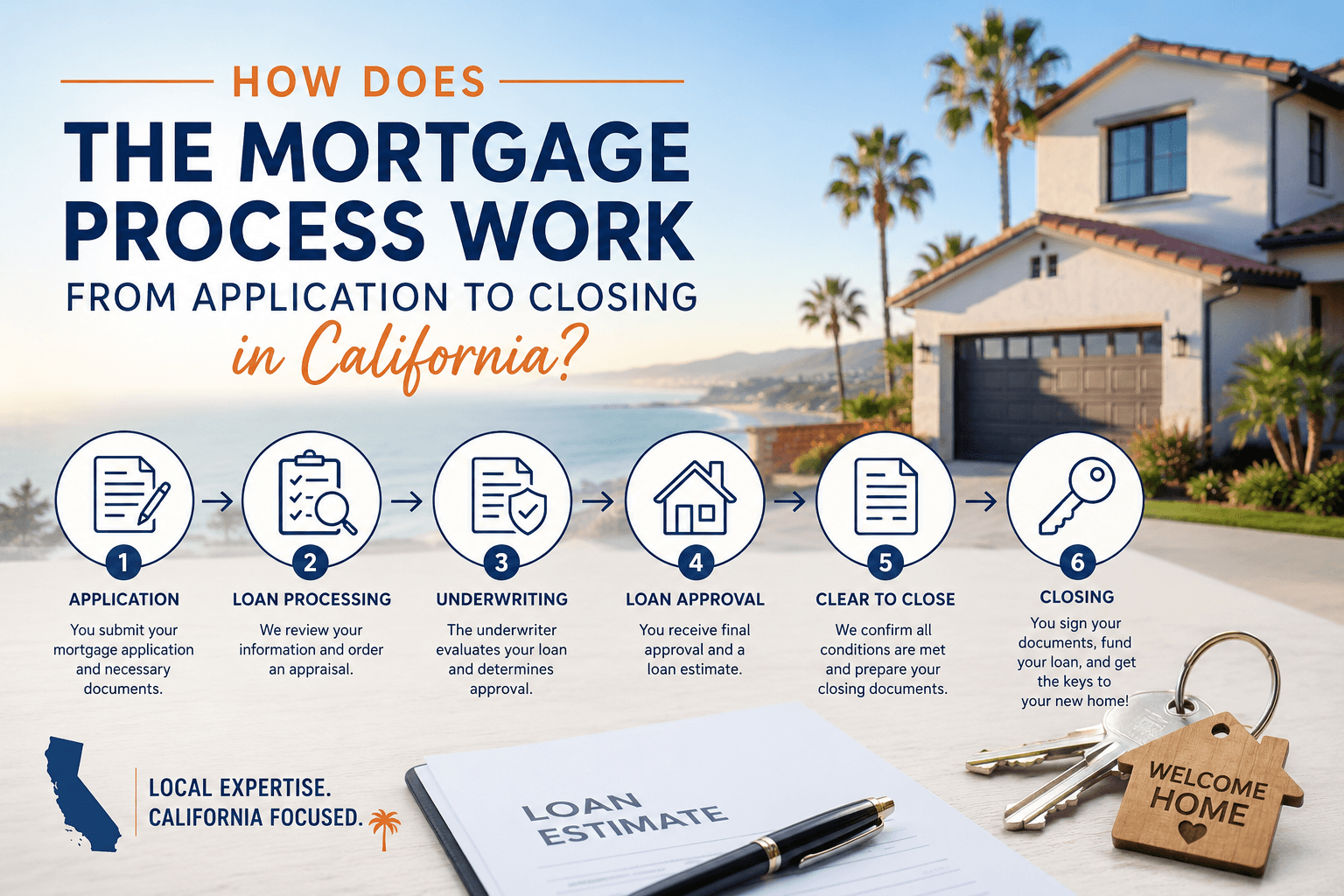
Once your offer is accepted, the mortgage process can start to feel like a black box — documents requested, dates moving, unfamiliar terms flying by. You don't need to memorize every underwriting rule to feel confident. You just need to understand the eight stages every California purchase moves through.
The short version: most California purchases close in 30–45 days from an accepted offer. FHA and VA loans often run closer to 45–60 days because of additional documentation and appraisal requirements. The single biggest factor in how fast your file moves isn't your loan type — it's how quickly you respond when your lender asks for something.
The 8 Stages, Start to Finish
1. Get pre-approved. Before you write an offer, your lender reviews your income, assets, credit, and debts to issue a pre-approval letter.
2. Submit your full application and review your Loan Estimate. Once you're in contract, you complete a full loan application. Within three business days, federal rules require your lender to send a Loan Estimate.
3. Open escrow and begin processing. A neutral escrow company holds funds and documents. Meanwhile, your loan processor orders the appraisal and verifies employment and income.
4. Appraisal and title search. An independent appraiser confirms the home is worth what you're paying, while a title company searches public records for liens or ownership issues.
5. Underwriting review. The underwriter evaluates your ability to repay, creditworthiness, the property's appraised value, and overall risk. Most files come back with a conditional approval.
6. Clear to close and your Closing Disclosure. You'll receive a Closing Disclosure at least three business days before signing — compare it line by line against your original Loan Estimate.
7. Final walkthrough and signing. A day or two before closing, you'll walk the property one last time. California's notarization rules typically still require an in-person signing appointment.
8. Funding and recording. Your lender releases loan funds to escrow, escrow disburses to the seller, and the deed is recorded with the county — the official moment ownership transfers to you.
A note on jumbo financing: Santa Clara County is a high-cost area, and the 2026 conforming loan limit here is $1,249,125 for a single-family home. If your purchase price puts your loan amount above that threshold, you'll be in jumbo territory — my specialty.
Frequently Asked Questions
How long does the mortgage process take in California?
Most purchases close in 30 to 45 days from an accepted offer, though FHA and VA loans can run 45 to 60 days.
What's the difference between a Loan Estimate and a Closing Disclosure?
A Loan Estimate arrives within three business days of your application and shows projected numbers. A Closing Disclosure arrives at least three business days before signing and shows your final, confirmed numbers.
Do I need a jumbo loan to buy in Santa Clara County?
Not necessarily. The 2026 conforming loan limit here is $1,249,125 for a single-family home.
What typically causes closing delays?
Most delays trace back to slow responses on underwriting conditions.
Can I close on a home remotely in California?
Much of the process now happens online, but California's notarization requirements still generally call for wet-ink signatures on the deed and note.
Chris Johnson | Associate Broker | Affinity Mortgage | NMLS #235072 | Company NMLS #252576 | Equal Housing Lender.
Chris Johnson is a dual-licensed California Real Estate Broker (DRE #01131369) and Mortgage Loan Originator (NMLS #235072) serving Santa Clara County and the Bay Area.
Ready to talk financing?
Get straight answers on rates, programs, and what you qualify for.